Choosing between armed and unarmed security is one of the most important decisions a business owner or property manager will make when investing in private protection. The right choice depends on your industry, your risk profile, and the environment your security team will be operating in. Getting it wrong can mean paying for more than you need — or worse, not having enough protection when it matters.
Here’s a practical breakdown to help you decide.
When Unarmed Security Makes Sense
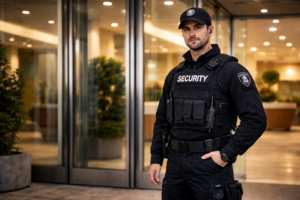
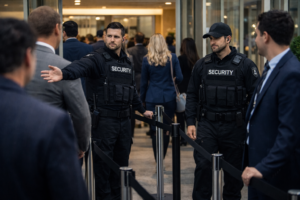
Unarmed security officers are the foundation of most commercial security programs. They provide a visible, professional presence that deters unwanted activity, manages access points, monitors surveillance systems, and responds to incidents with trained de-escalation techniques.
Unarmed officers are typically the right fit for office buildings and corporate lobbies, retail locations and shopping centers, residential communities and HOA properties, construction sites during off-hours, and warehouse or distribution facilities.
The value of unarmed security lies in consistency. A trained, uniformed officer posted at your facility around the clock sends a clear message: this property is monitored, managed, and protected. For most commercial environments, that visible deterrent is exactly what’s needed.
When Armed Security Is the Better Choice
Armed security officers carry a higher level of training and are licensed to carry firearms under Texas law. They’re deployed in environments where the nature of the assets, the location, or the threat level warrants a stronger security posture.
Situations that typically call for armed guards include data centers and technology facilities with high-value infrastructure, financial institutions and cash-handling operations, high-profile corporate events or executive protection, industrial parks in high-risk areas, and any location where there’s a documented history of violent incidents or threats.
In Texas, armed security officers must hold a valid Level IV license issued by the Texas Department of Public Safety’s Private Security Bureau. This requires additional training beyond the Level III certification required for unarmed guards, including firearms proficiency and use-of-force protocols.
The Hybrid Approach
Many businesses don’t need to choose one or the other exclusively. A layered security plan might deploy unarmed officers at access control points and common areas during business hours while positioning armed officers at high-value zones or during overnight shifts when the risk profile changes.
This kind of tailored approach is what separates a professional security provider from a company that just fills a post. At Three Crowns Protection Group, every contract starts with an assessment of your specific needs — because a one-size-fits-all approach has no place in professional security.
Making the Right Call
If you’re not sure which direction is right for your facility, start by asking a few key questions. What are you protecting — people, property, data, or all three? Has your location experienced security incidents in the past? What’s the perception of safety among your employees, tenants, or visitors? Are there regulatory or insurance requirements that mandate a certain level of security?
A qualified security provider will help you answer these questions and build a plan around your actual risk profile, not a generic template.
Three Crowns Protection Group provides both armed and unarmed security services across Central Texas, including San Antonio, Austin, Fort Worth, Waco, Granbury, and surrounding areas. Request a quote to discuss your security needs with our team.