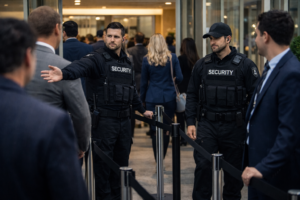
Managing commercial property in Texas means balancing tenant satisfaction, operational costs, and liability — and security sits at the center of all three. The threat landscape has shifted significantly over the past few years, and property managers who rely on outdated security strategies are leaving their buildings, their tenants, and themselves exposed.
Here are five security risks that deserve your attention heading into 2026.
1. Inadequate After-Hours Coverage
Most property incidents don’t happen during business hours. Theft, vandalism, unauthorized access, and trespassing spike overnight and on weekends when buildings are empty and staffing is minimal. If your security coverage drops to zero when the last employee leaves, you have a gap that’s easy to exploit.
The fix doesn’t have to be complicated. Vehicle and foot patrol services during off-hours provide consistent visibility across your property. Combined with CCTV monitoring, you create a layered defense that covers the hours when your property is most vulnerable.
2. Uncontrolled Access Points
Commercial properties — especially multi-tenant office buildings and industrial parks — often have more entry points than they realize. Side doors, loading docks, parking garage gates, and service entrances can all become security liabilities if they’re not actively managed.
Professional access control goes beyond locks and key cards. It means having trained personnel who verify credentials, log visitor activity, screen deliveries, and know how to respond when something doesn’t add up. Every access point is either a controlled gateway or an open invitation. There’s no middle ground.
3. Relying Solely on Technology Without Personnel
Cameras and alarm systems are valuable tools, but they don’t respond to incidents. A camera records what happened. A trained security officer prevents it from happening — or manages the situation in real time when it does.
The most effective security programs combine technology with human presence. Surveillance systems provide coverage and documentation. Officers provide judgment, intervention, and the kind of situational awareness that no camera can replicate.
4. Insufficient Incident Documentation
When a security incident occurs on your property, the quality of your documentation can determine whether your insurance claim is approved, whether your liability is limited, and whether law enforcement can take action.
Professional security officers are trained to write detailed incident reports, preserve evidence, document witness information, and follow chain-of-custody procedures. If your current security setup doesn’t produce thorough, timestamped documentation after every incident, you’re operating without a safety net.
5. No Proactive Security Assessment
Many property managers don’t think about security until something goes wrong. By then, you’re reacting instead of preventing. A proactive security assessment evaluates your property’s physical vulnerabilities, identifies patterns in incident history, reviews current coverage for gaps, and recommends improvements before a problem escalates.
This kind of forward-thinking approach is what separates a security vendor from a security partner.
The Bottom Line
Property security isn’t a line item you minimize — it’s an investment that protects your tenants, your assets, and your reputation. The most successful property managers in Texas are the ones who treat security as a strategic priority, not an afterthought.
Three Crowns Protection Group works with commercial property managers across Central Texas to build security programs that address real risks. Contact us to schedule a property security assessment.